
A note to the reader
About this edition
A conversation with my mom, one paper at a time.
How a weekly gift to my mom became a standing conversation between us—and the family thread running through the reading.
This edition began with a gift for my mom—a subscription to LetterJoy’s Federalist Papers series. LetterJoy’s service sends one paper each week on 1780s-inspired newsprint. As she opened them at home, I started following along online.
Soon we were talking about each new paper as it arrived. At that weekly pace, the essays feel like what they first were: public letters meant to be read, considered, and talked over. If you would like that same rhythm in your own inbox, you can subscribe to have each paper delivered by post.
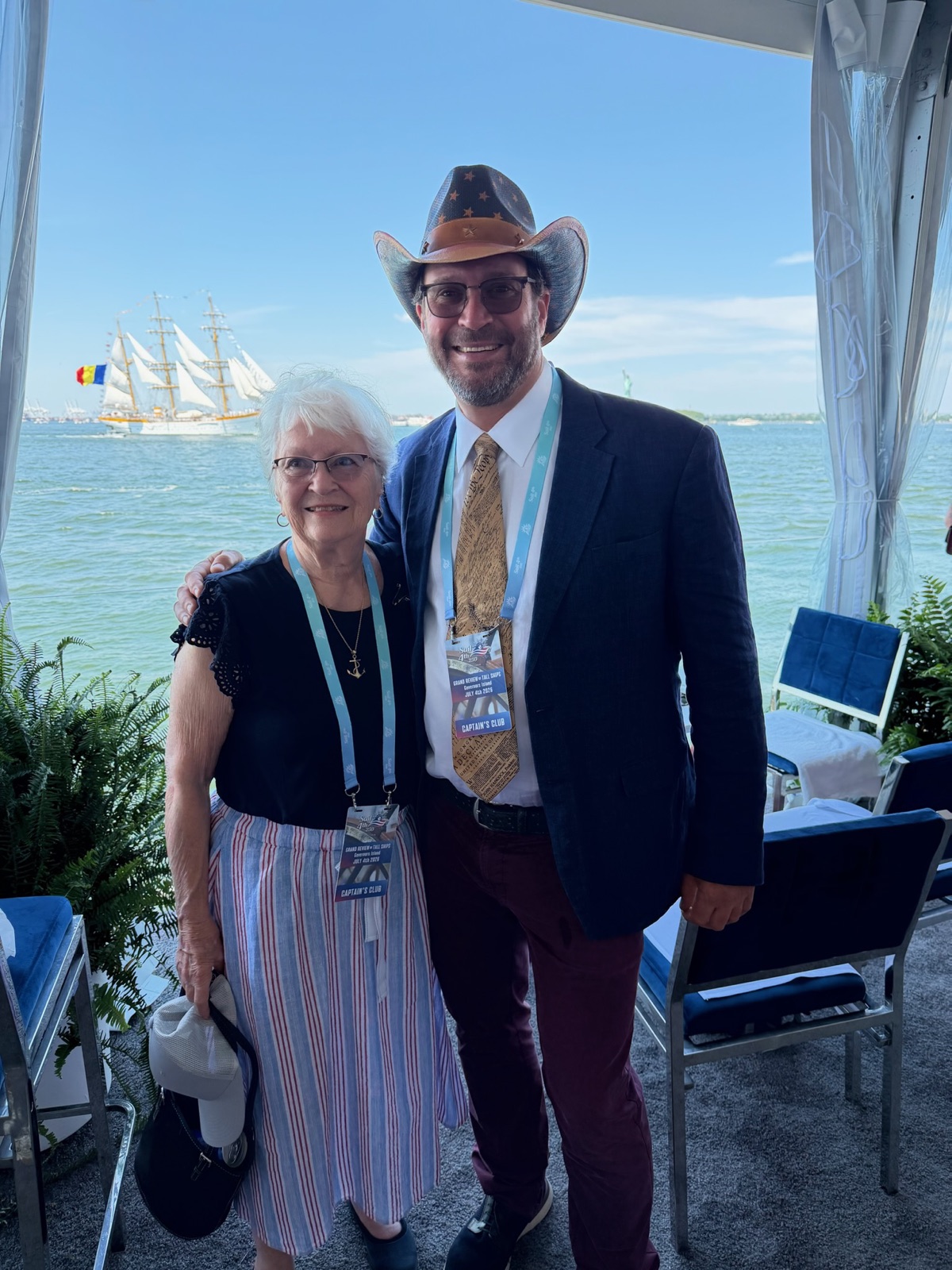
A family thread through the founding
Charles Thomson · Secretary of the Continental Congress, 1774–1789
The reading has another personal connection. Charles Thomson was my sixth-great-uncle—my mom’s fifth-great-uncle. At ten years old, he arrived in America with no parents and no money. His mother had died in Ireland; his father died during the Atlantic crossing, and the brothers were separated after they landed. From that beginning, Thomson rose to become the only Secretary of the Continental Congress, serving from its first meeting in 1774 until the new federal government began in 1789.
Thomson’s and John Hancock’s were the two names printed on the Dunlap broadside—the Declaration of Independence’s first published form, dispatched throughout the states and to Washington’s army before the famous parchment was engrossed and signed. The parchment became the enduring national icon; Thomson’s attestation appeared on the version that first carried independence into American public life.
And that was only one chapter. Thomson helped bring the Great Seal of the United States to its final design, personally carried word of George Washington’s unanimous election to Mount Vernon, and later spent nearly twenty years translating the Septuagint Bible from Greek into English—the first published English translation of the ancient Greek Old Testament. Mom and I think of that history as we read these arguments together.
History in the room
Nothing substitutes for the real thing.
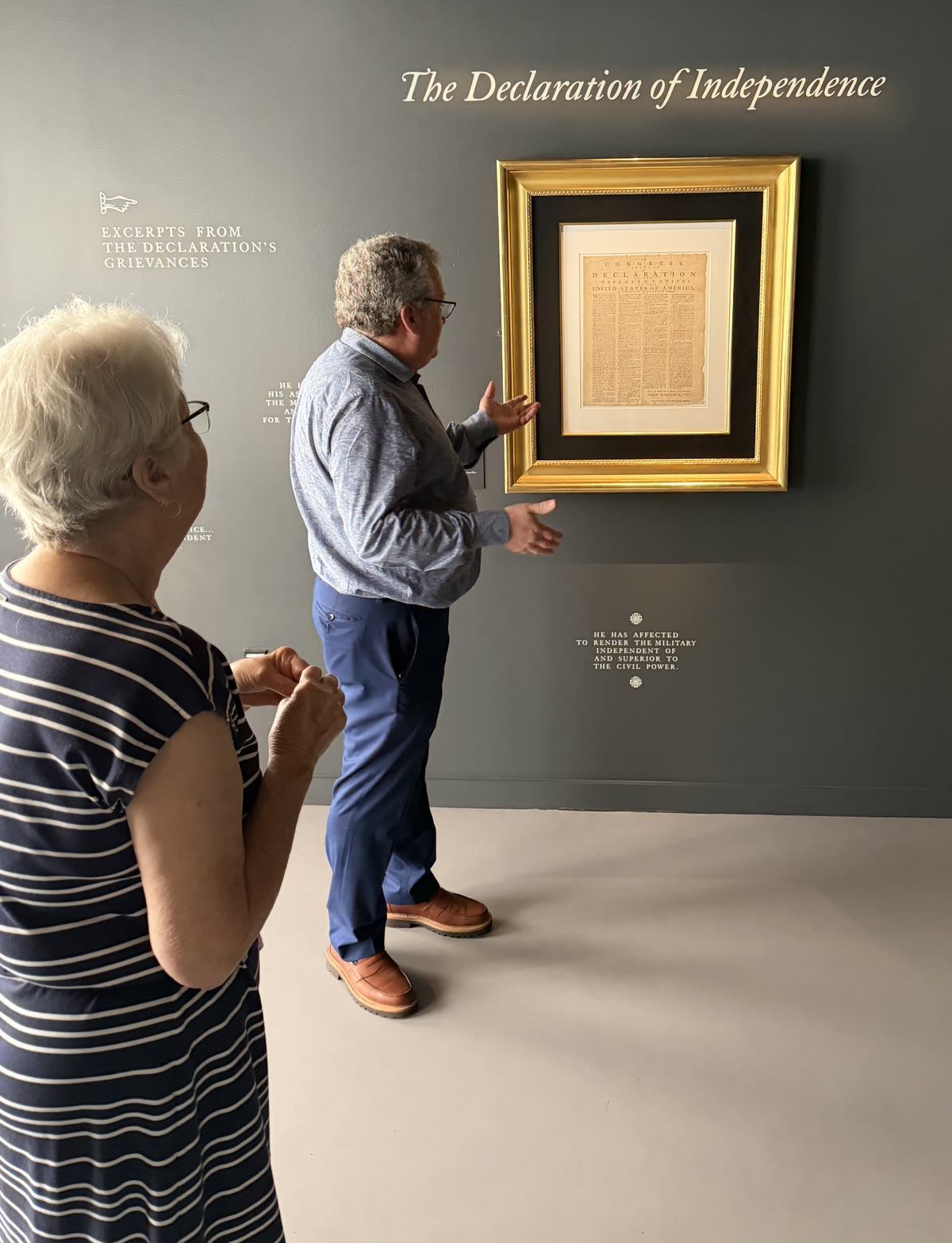
We are fortunate to know Seth Kaller, one of the country’s leading experts in original American documents. On July 5, 2026, Mom and I visited The Promise of Liberty: Words That Shaped a Nation at the South Street Seaport Museum, an exhibition curated by Seth and the museum.
In this photograph, Seth is showing Mom a historic printing of the Declaration of Independence carrying the printed signature of Charles Thomson—her fifth-great-uncle. We had read about Thomson’s place in the founding. Here it was, in ink and paper, directly in front of us.
Seeing an original reveals its scale and physical presence in a way a screen cannot. Seth has since shared high-resolution scans of original Federalist printings he has handled; they are in the print room. If The Promise of Liberty—or any exhibition of original historical material—comes near you, go see it. And if you find yourself wanting to bring a piece of history home, Seth’s site is a good place to start looking.
Their words, clearly set
The essays retain their original wording. Modern type, comfortable spacing, and a clean Reader option make them easier on contemporary eyes. The newspaper view borrows the atmosphere of early printings without reproducing any one of them exactly. A fuller note on the types, the columns, and the wear is in the colophon.
A companion, not a lecture
Each paper has a short plain-language note: the argument in a nutshell, its key moves, why it mattered, and a question worth discussing. Historical details add color and make the stakes clearer.
Questions, comments & praise
Found a typo, have a question, or just want to tell me the reading landed? I would like to hear it. Write to [email protected].